Moon

October 6, 2011 in Space

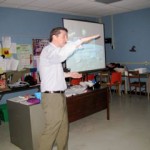
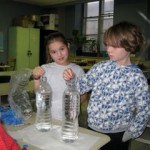
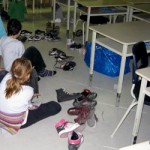
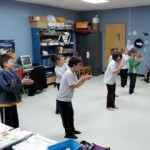
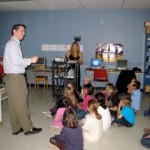
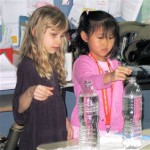
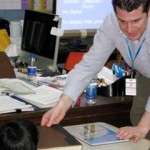
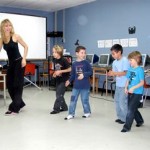
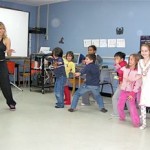
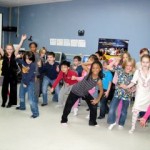
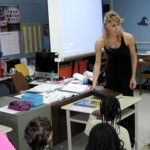
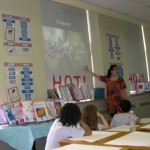
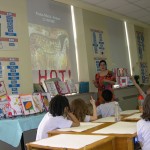
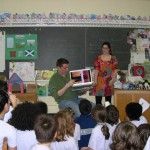
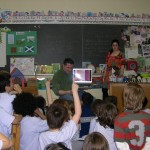
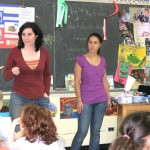
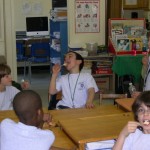
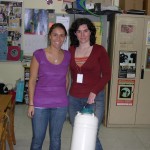
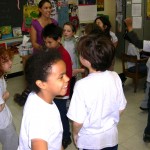
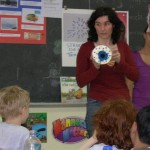
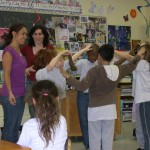
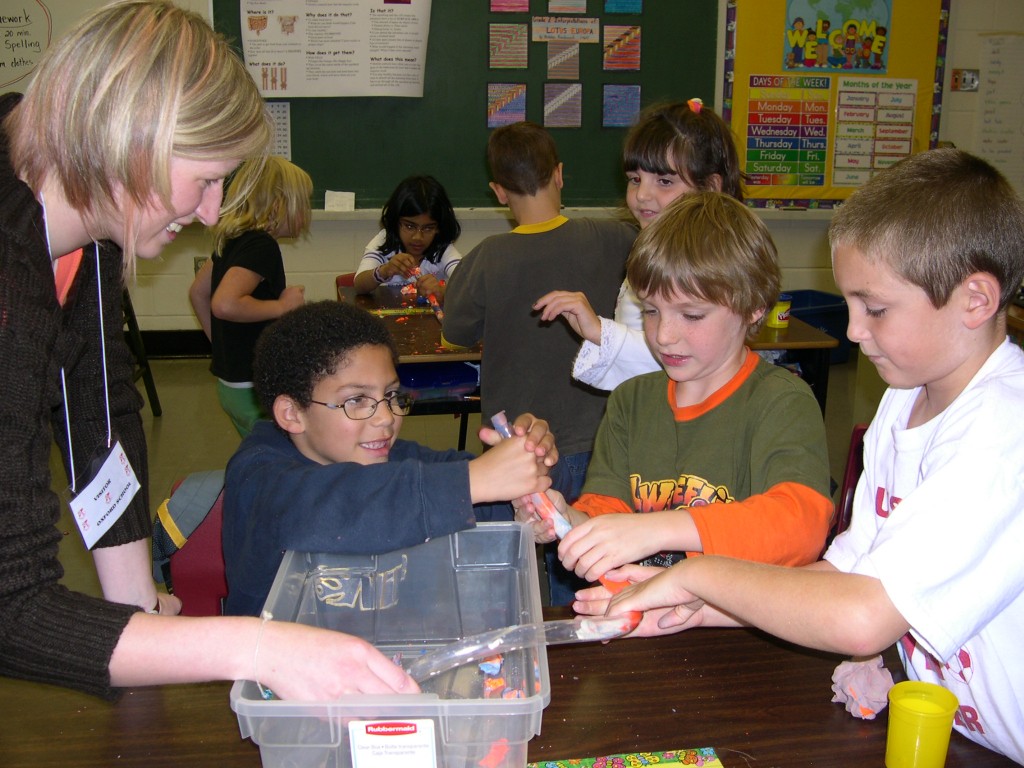
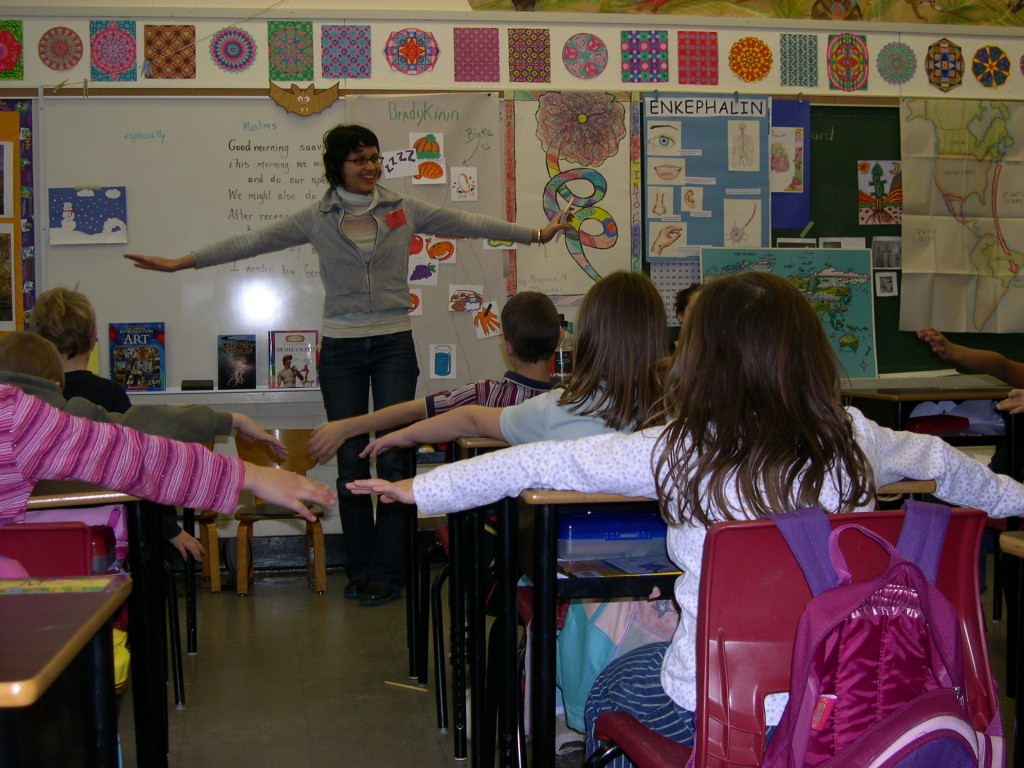
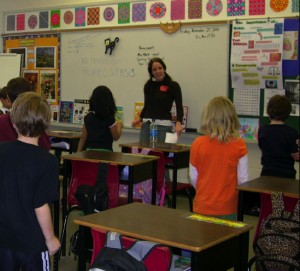
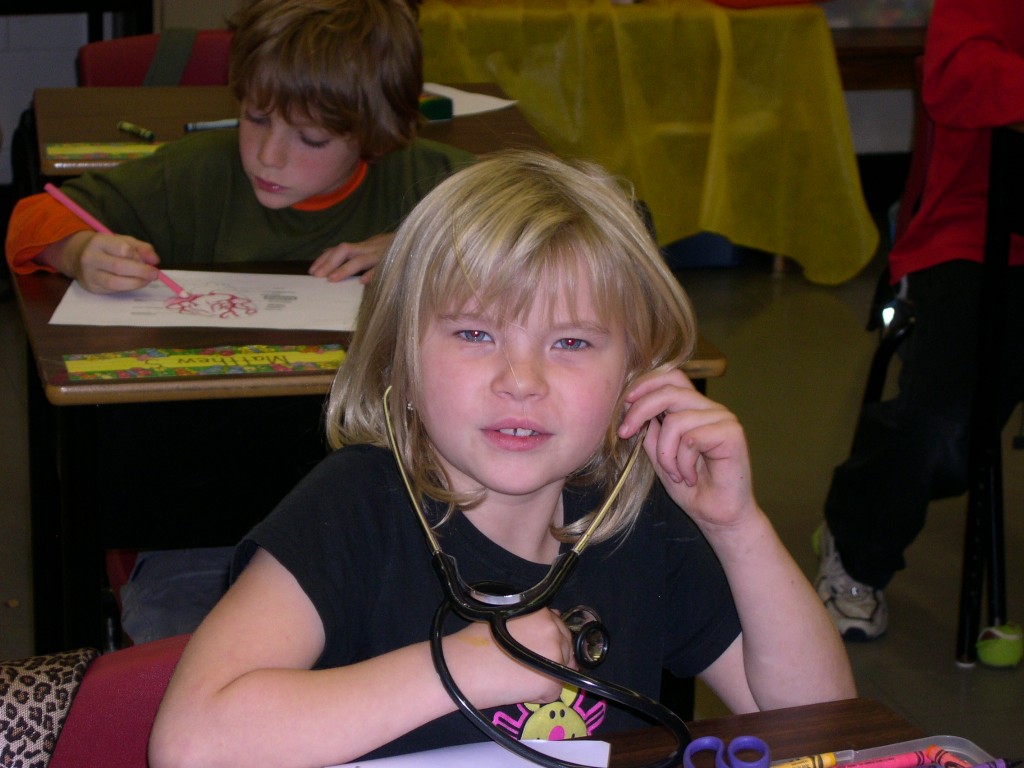
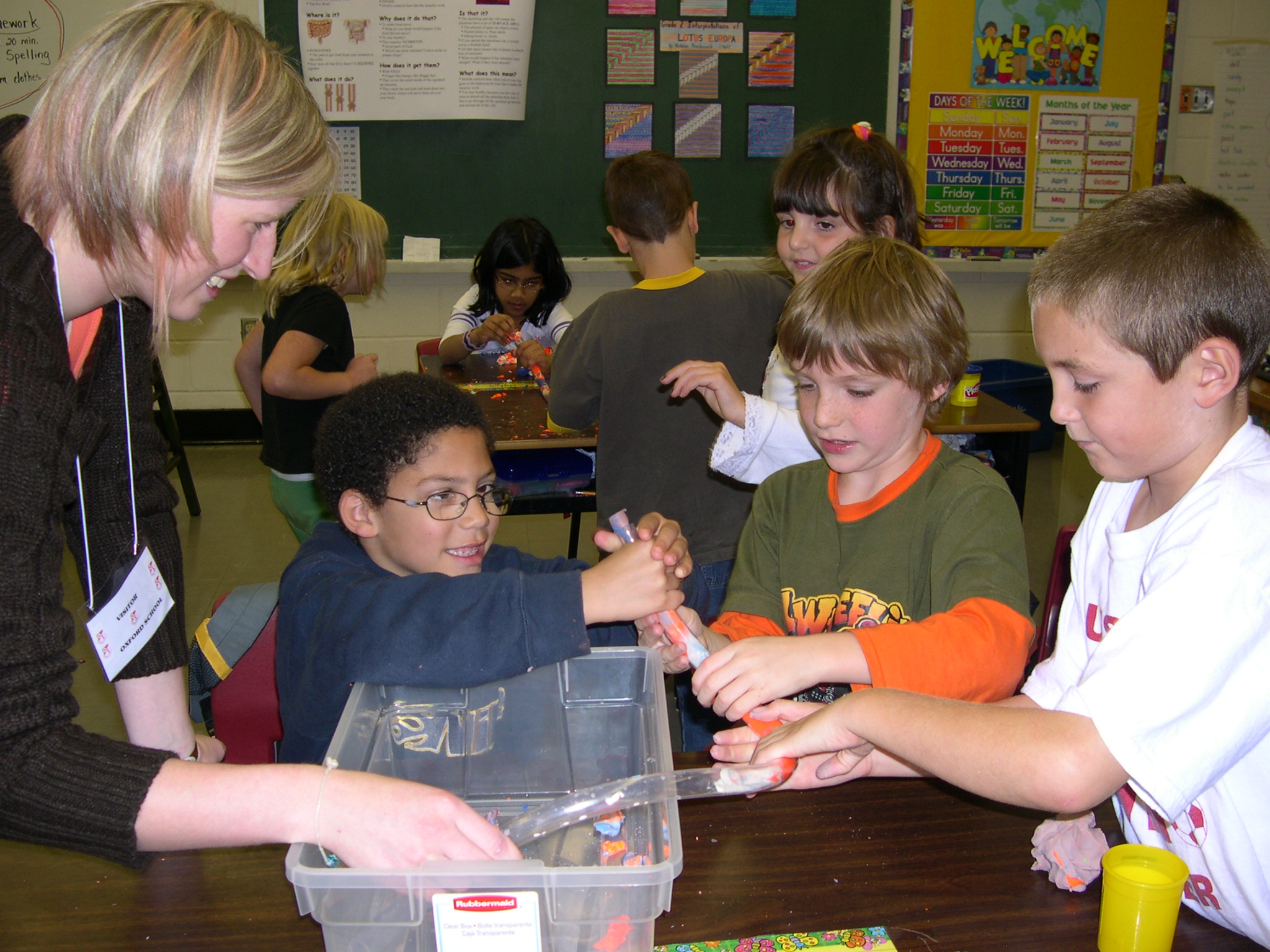
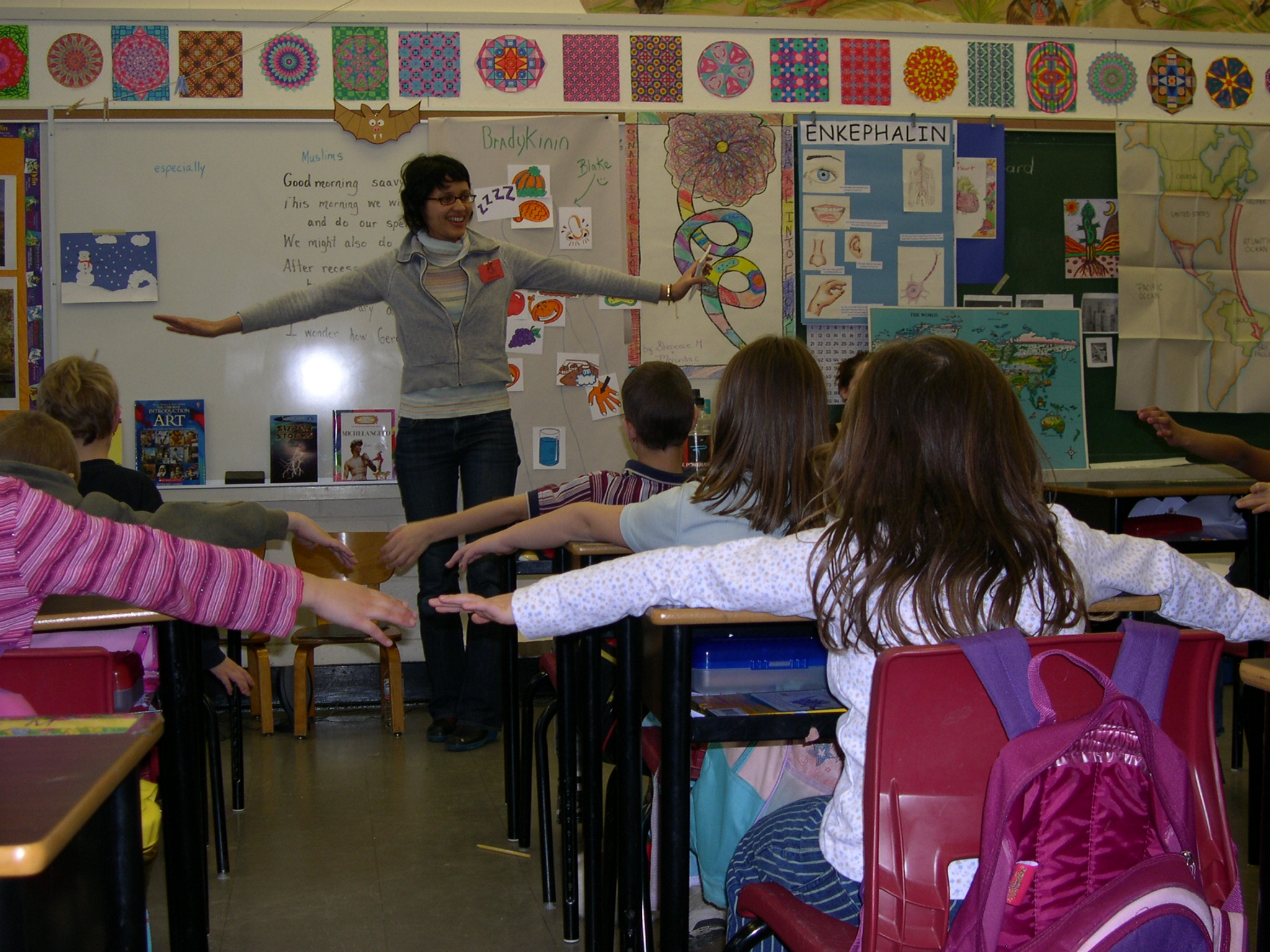
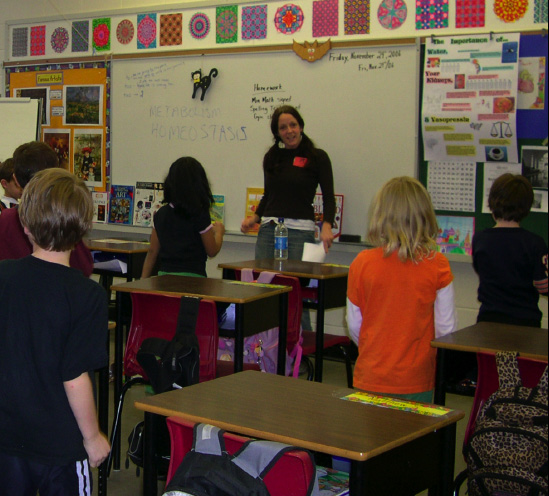
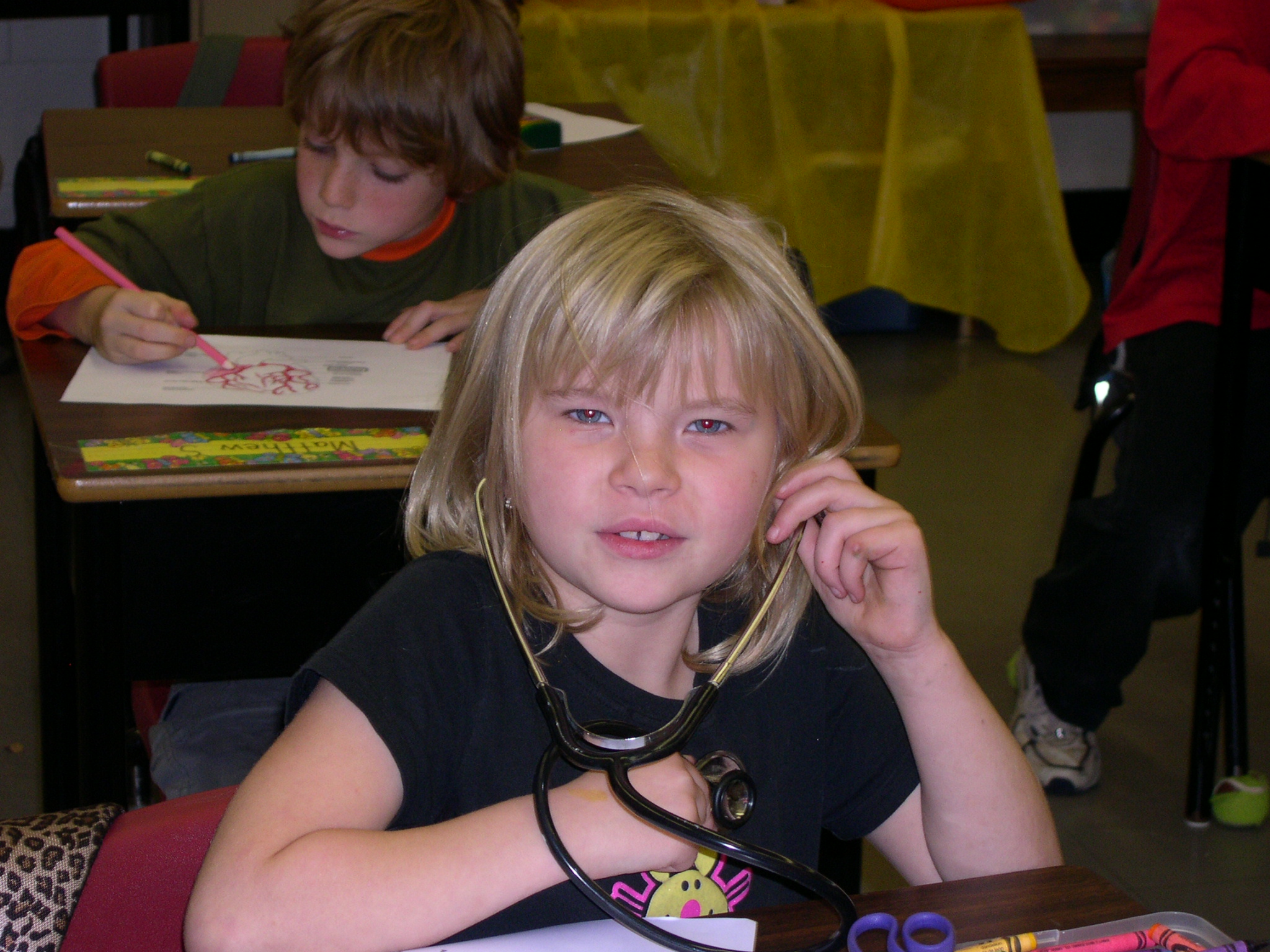
Thursday the 3rd of December, 2009, Ms Breton’s 3rd grade classes at École FACE School took a trip to the moon, piloted by MoL Team Moon Science, Joanna Mansour (M.Sc. student, Sociology, U Montréal) and Dr. Tarek Kassem (Post-Doctoral Fellow, Chemistry, U Montréal).   Aided by a series of videos (see URLs below), Tarek and Joanna engaged the students in an interactive discussion featuring the many faces of the moon, the theory of its creation, Galileo, Neil Armstrong and of course moon composition, which although it is not made of cheese, like cheese, is rich in calcium.   On re-entry to Earth, Tarek mentioned the importance of friction, the force resisting the motion of solid surfaces, and how the friction of the earth’s atmosphere slows down the space ship creating heat.  The students were then asked to feel the heat created by the friction of rubbing their hands together.  They examined fluid friction by observing the speed of beads dropped into solutions of different viscosity (oil and water).  Sliding a block along books with different surfaces, the students recognized that rough surfaces, which have a higher coefficient of friction, slowed the motion of the block better than smooth surfaces.  Bringing concepts about the moon and friction together, Joanna taught the students how to moon walk like Michael Jackson.  The moon walk was performed with and without shoes to examine which surfaces caused the least friction and best allowed the dancer to glide appearing to float without friction as if on the moon. Exploring friction by rubbing their hands together, clicking their fingers together and moon walking, the students enjoyed being choreographed to dance in ways that were both fun and educational.  After one more moon dance with MoL, the students thanked team moon science for a fantabulous lunar experience.


For a video on the phases of la Lune see:

http://www.youtube.com/watch?v=H9Qe6Nh8JJw&feature=related

For a video on the distance to travel to go to the moon and the composition of the moon, see:

http://www.youtube.com/watch?v=_-rvlvuR2zw&feature=related

For a video on les éclipses, see:

http://www.youtube.com/watch?v=8kt4s4PH-GA&feature=related


Mars

October 6, 2011 in Space

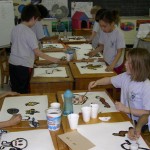
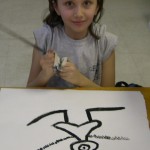
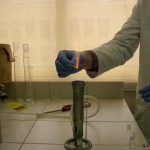
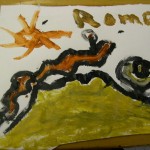
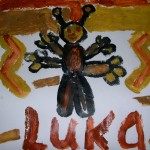
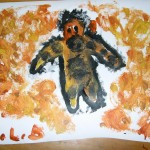
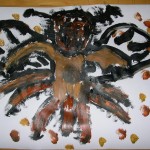
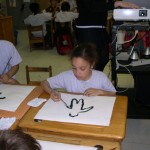
On Wednesday, March 18th, 2009, the Molecules of Life Project blasted off to Mars with Ms Schuster’s 3rd grade class piloted by Concordia University Masters of Art Education student Alexandra Beneteau and Université de Montréal Chemistry Department Post-Doctoral Fellow Tarek Kassem. In a discussion on what we would need to go to Mars, the students were well prepared and knew that the so called “red planet” was composed of iron oxide rocks, similar to those found on earth and that the 4th planet also may possess water. They hypothesized that plants could be grown in the carbon-dioxide rich atmosphere of Mars to produce oxygen by photosynthesis, assuming obstacles such as the colder temperature and lack of a protective atmosphere from the sun’s UV radiation could be surmounted on Mars. Tarek showed the students that they could burn different salts found on Mars using a hot flame to detect their composition, using for examples lithium, sodium, potassium and copper salts which exhibited red, yellow, violet and green colored flames (see: http://chemistry.about.com/library/weekly/aa110401a.htm). Alexandra brought us down to earth yet back in prehistoric times as she explained that the same iron oxide minerals found on Mars were used by cave-people in France to paint pictures of the animals they hunted about 15,000 to 20,000 years ago. The minerals hematite, jarosite and goethite provided respectively pigments for blood red, yellow ochre and brown colors. Painting in the style of the primitive earthlings, who used coal to trace a dark outline of their figures which were filled in using iron oxide pigments, the students used similar pigments, obtained from Mars, to paint cave images of animals that they could imagine might have lived in the harsh climate of Mars.
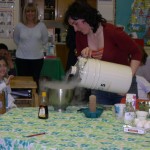
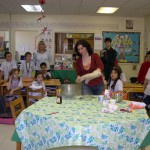
Thankful for their astrochemical experience, the students thanked MLP Team Mars for taking them on a field trip to the red planet and the caves of France.

Cosmic Ice

October 6, 2011 in Space

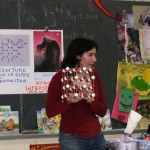
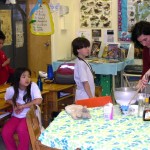
Wednesday May 13th, attempting to nucleate a crystalline matrix, Ms Schuster’s 3rd grade class sensed the need for order in the members of their crystal lattice, before being asked to warm up to the idea of the amorphous state, which is adopted by cosmic ice, as MLP took them on another journey into space with more astrochemistry piloted by Concordia University Masters of Art Education student Diana Rodriguez and Université de Montréal Chemistry Department Doctoral Student Béatrice Lego. Ice has been observed to have 12 different crystal structures and two amorphous states.  Looking at pictures of the hexagonal structure adopted by ice in the crystalline state,  the students considered how the molecular structure leads to the six pointed and six-sided shapes of snowflakes.    Considering images and a model of cosmic ice, the students stretched their minds around ideas of an amorphous ice form collecting different simple molecules that may react to form prebiotic precursors in space.   Challenged to comprehend something amorphous, the students were asked to consider the roles of ice in ice cream.  Given the proposal to make ice cream, one student remarked “is this not cooking?”  The students were then asked to consider the key difference between a scientific experiment and cooking, the need for a hypothesis, and so the “ice cream  hypothesis” was born: can one make ice cream without ice?   Employing all the usual ingredients, except ice, Béatrice showed how liquid nitrogen could be used to cool the bowl to make nearly instant ice cream, which the students confirmed tasted as good, if not better than store bought gelato.

Enjoying the magnificent taste of ice cream and the unusual nature of cosmic ice, the students thanked Diana and Béatrice for wetting their enthusiasm for ice in crystalline and amorphous forms.

This marks the end of MLP at FACE this semester.  Starting to present at other schools, MLP goes to École Paul Bruchési on May 14th.

Thanks again for all of your assistance and have a great Summer.

WL


For information on the Cosmic Ice Laboratory see:  http://www-691.gsfc.nasa.gov/cosmic.ice.lab/

On ice structure: http://www.tms.org/pubs/journals/JOM/9902/Schulson-9902.html

On ice cream structure : http://www.foodsci.uoguelph.ca/dairyedu/icstructure.html