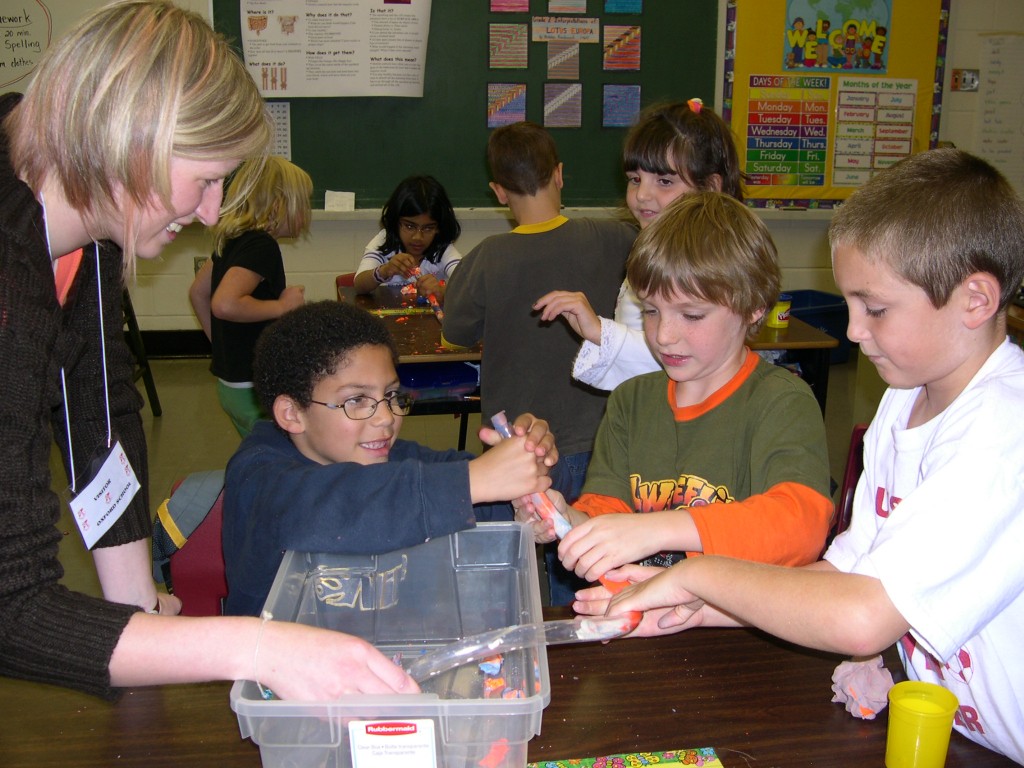
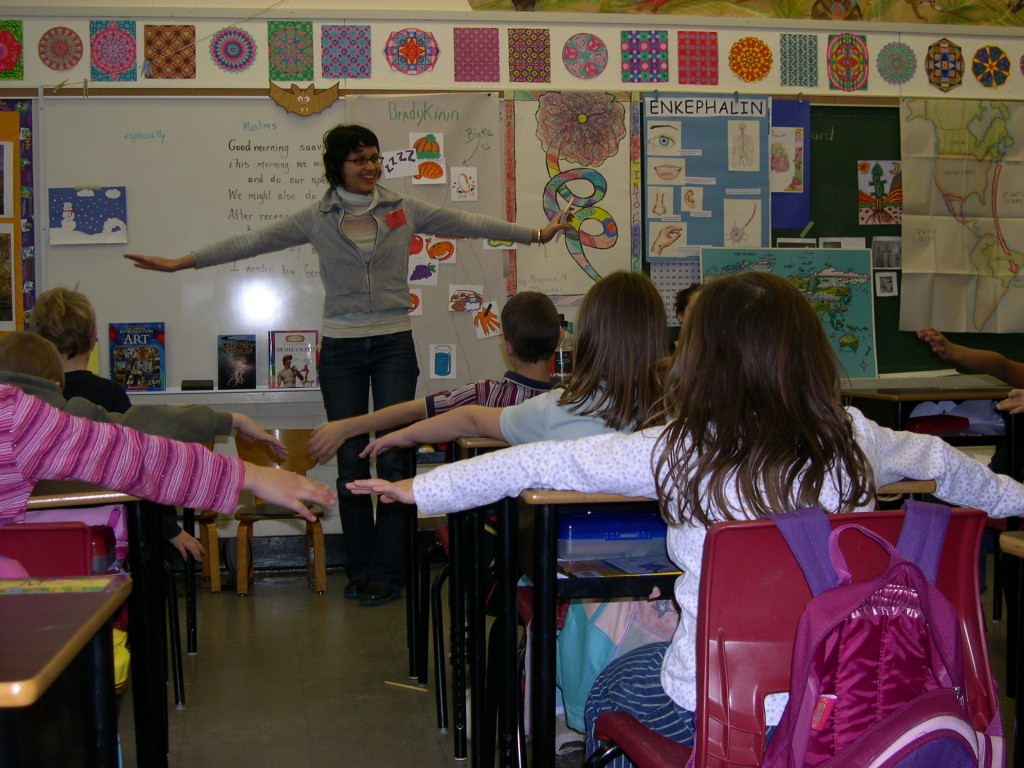
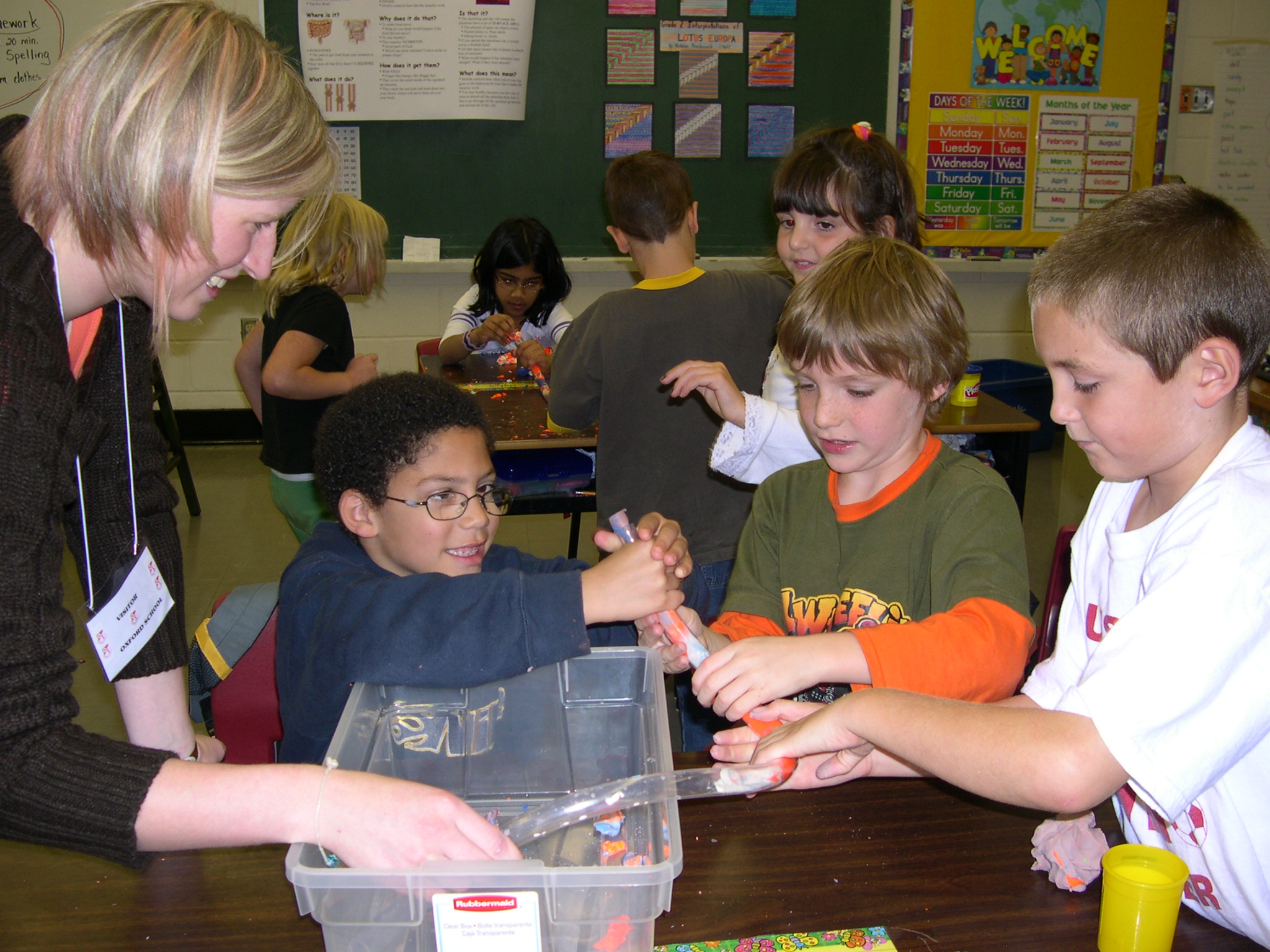
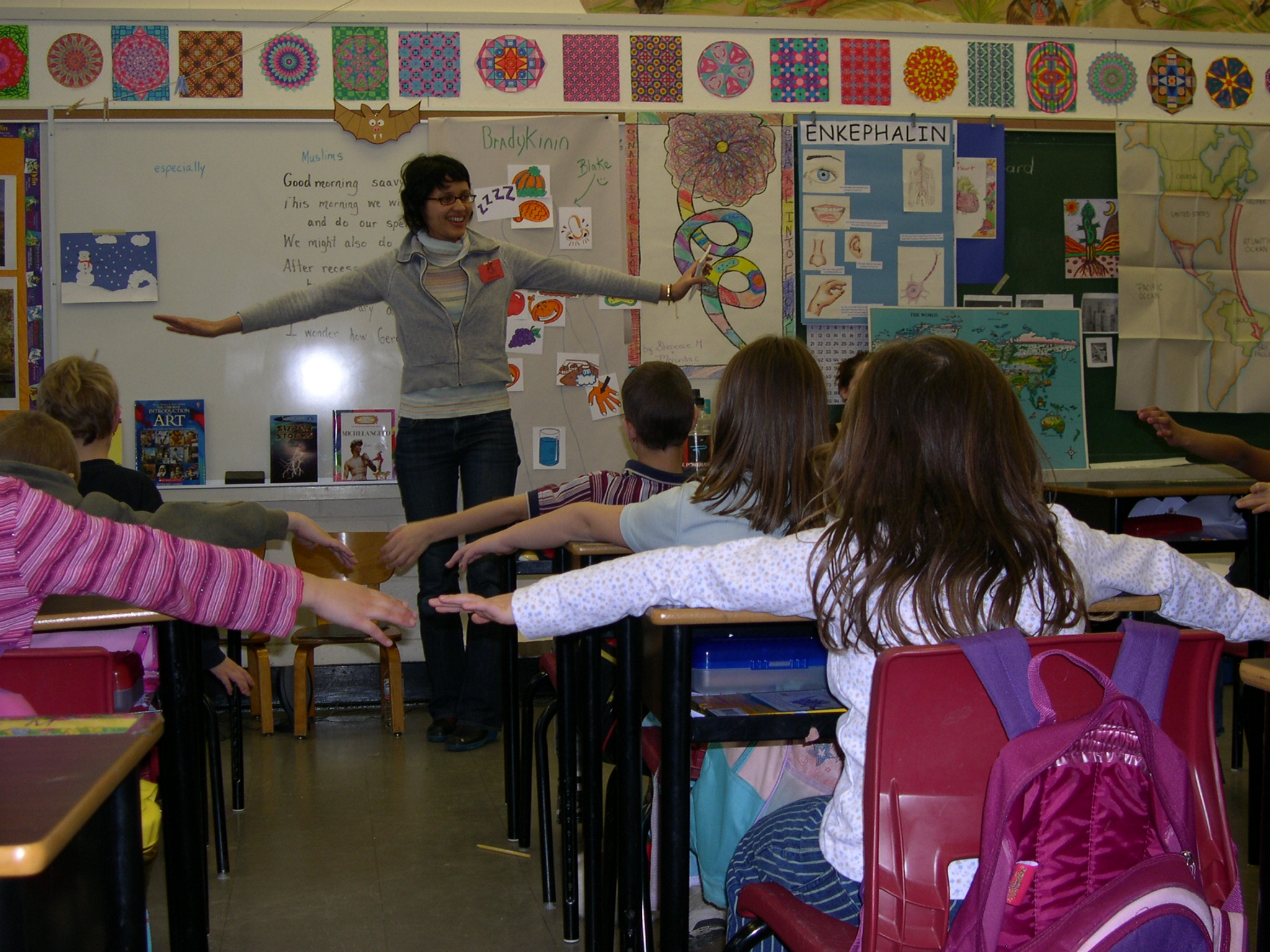
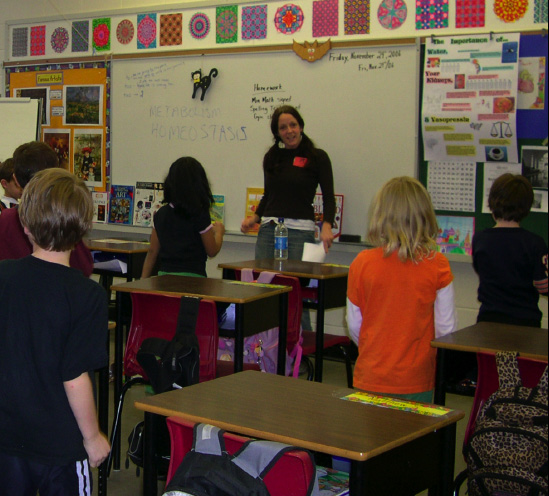
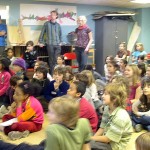
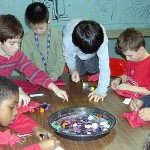
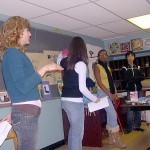
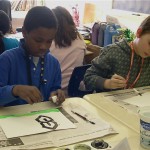
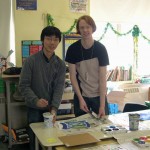
On Friday, November 28th, 2008, the fifty-nine students of the combined English and French fourth grade classes taught by Ms Reavell and Ms Breton at École F.A.C.E. School were exposed to fifty minutes of stench-free sulfur chemistry and bonded with mercatpans thanks to university students Jess Aylsworth (BA Art Education, Concordia U), Cindie Eugene (B.Sc., U. Montréal), Tanya Godina (MSc., U. Montréal), Maya Grubisic (BA Art Education, Concordia U), Zac Kenny (BA Art Education, Concordia U) and Sixian Lin (B.Sc., U. Montréal). Tanya and Maya started a bilingual discussion on sulfur, which from the past MLP on the essential elements, the students remembered was in eggs and in the smell of rotten eggs. They soon realized that sulfur compounds are also responsible for the smell and taste of grapefruit, onion and garlic, as well as for the tenacious odor of skunk. At this point, rather than make stink bombs, the discussion curled to hair, which has sulfur too; however, it is bonded to other sulfur atoms in the bridges between hair fibrils that are responsible for hair’s toughness and abrasion resistance.
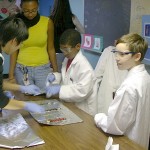
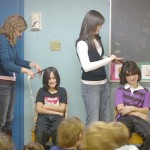
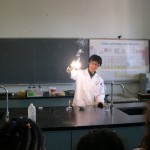
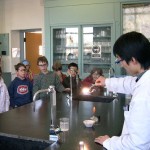
Three volunteers darned proper lab safety gear and joined Cindie and Sixian in the performance of an experiment in which Professor Lubell’s hair served as straight starting material which was curled by the chemical process in which the sulfur-sulfur bridges in hair are broken, rearranged and reformed by the use of a two-step reduction-oxidation process. Once on the subject of hair and bonds, we could not help ourselves from playing with the weaker bonds in hair (i.e., hydrogen and salt bonds). Armed with curling irons, Jess, Tanya, Maya and Zac rearranged hydrogen bonds and shuffled salt bridges as they straightened out some curls and spiraled up some others on the heads of four more student volunteers.
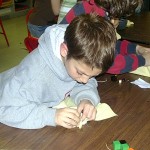
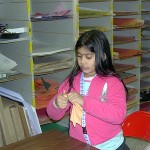
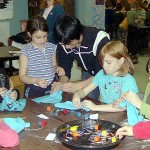
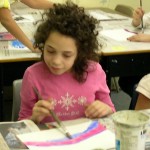
Finally everyone got into the act of reshaping fibers by bond shuffling, by exploiting the thermal plasticity of polyester. Employing rubber bands to tightly bind their own handkerchief-sized fabric samples around stones, marbles and blocks, the students had just enough time to staple a name tag to their sample before placing the bound textiles into boiling water for 5 minutes. After cooling the fabric, the bound objects were removed, yet their impressions remained as memories formed from the shuffling of weak chemical bonds. The students left thankful to learn about sulfur and bonding, without the stench.
Much thanks goes to team sulfur for showing us that mercaptans can be fun, to Valerie d. Walker for teaching team sulfur about the joys of thermal plastic textiles, and to Peter for helping to tend the big pot of boiling water.