Iron

October 6, 2011 in Elements

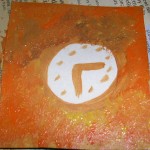
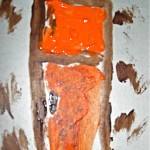
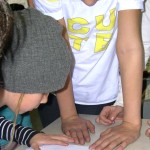
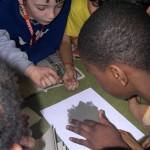
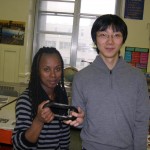
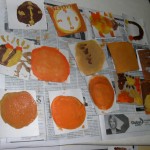
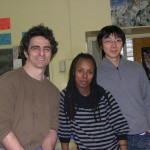
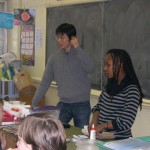
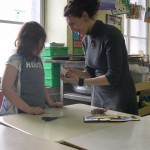
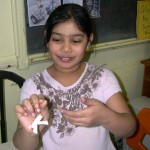
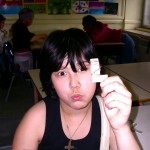
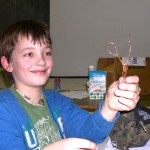
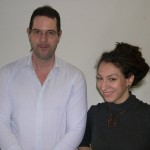
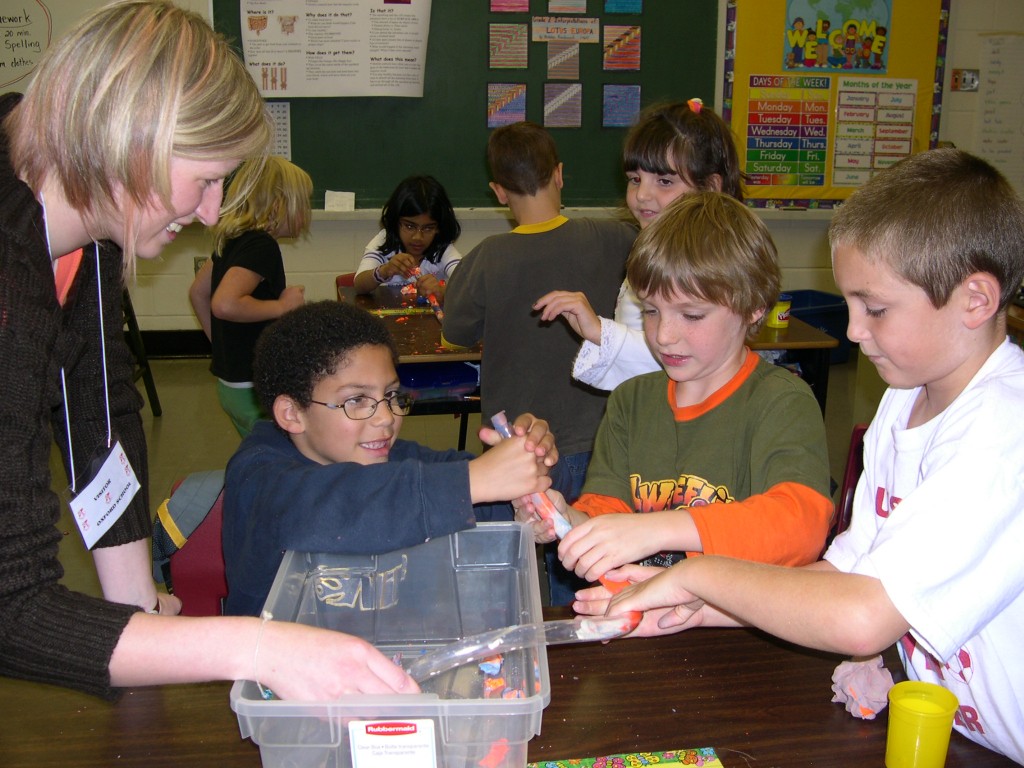
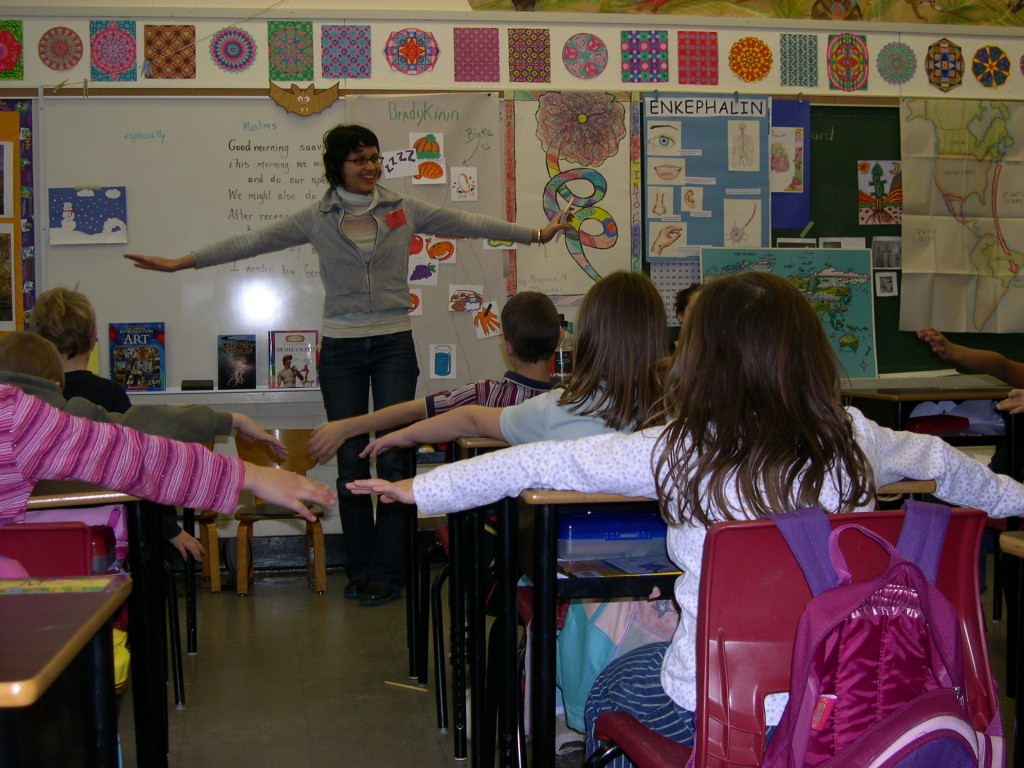
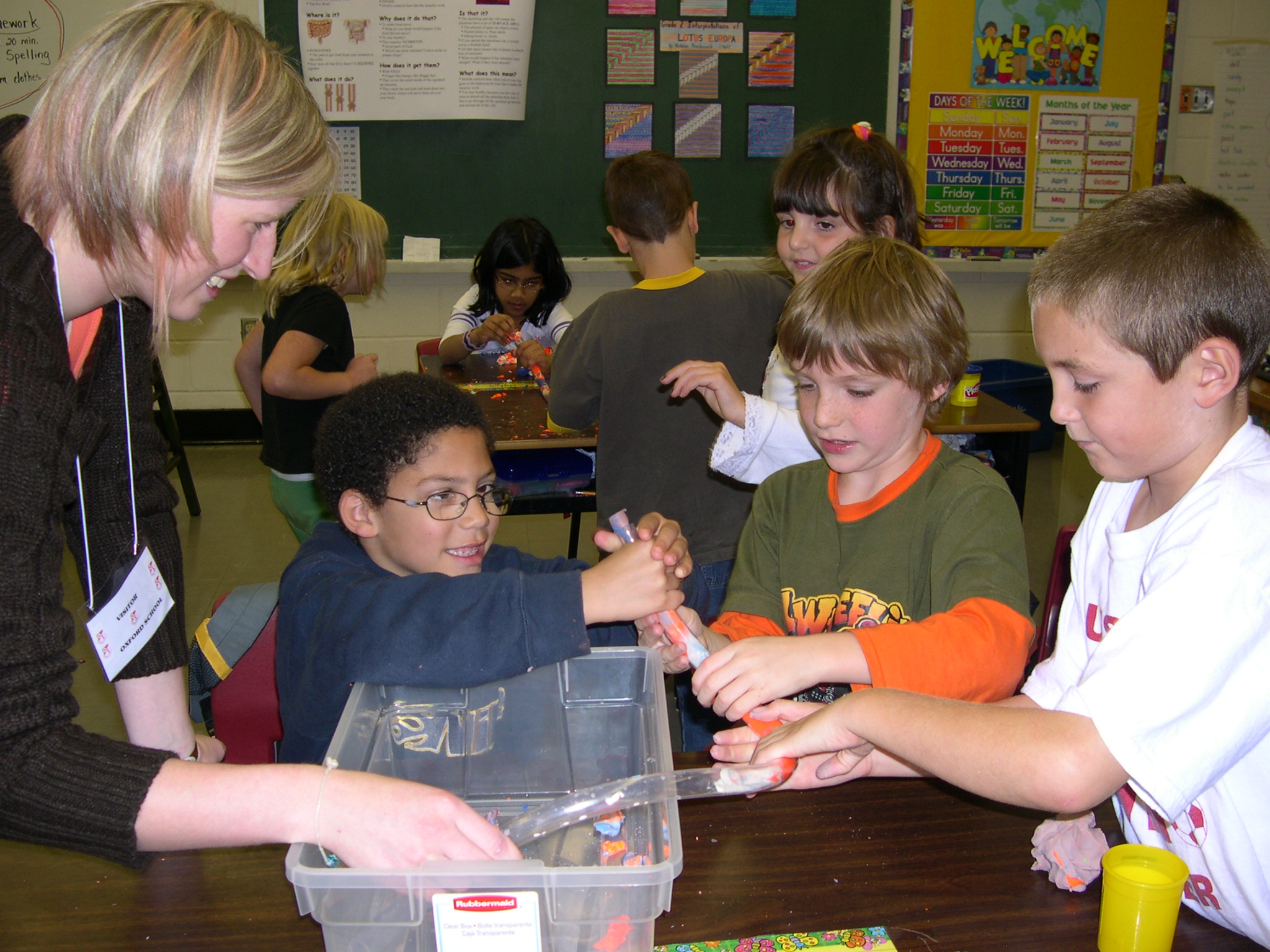
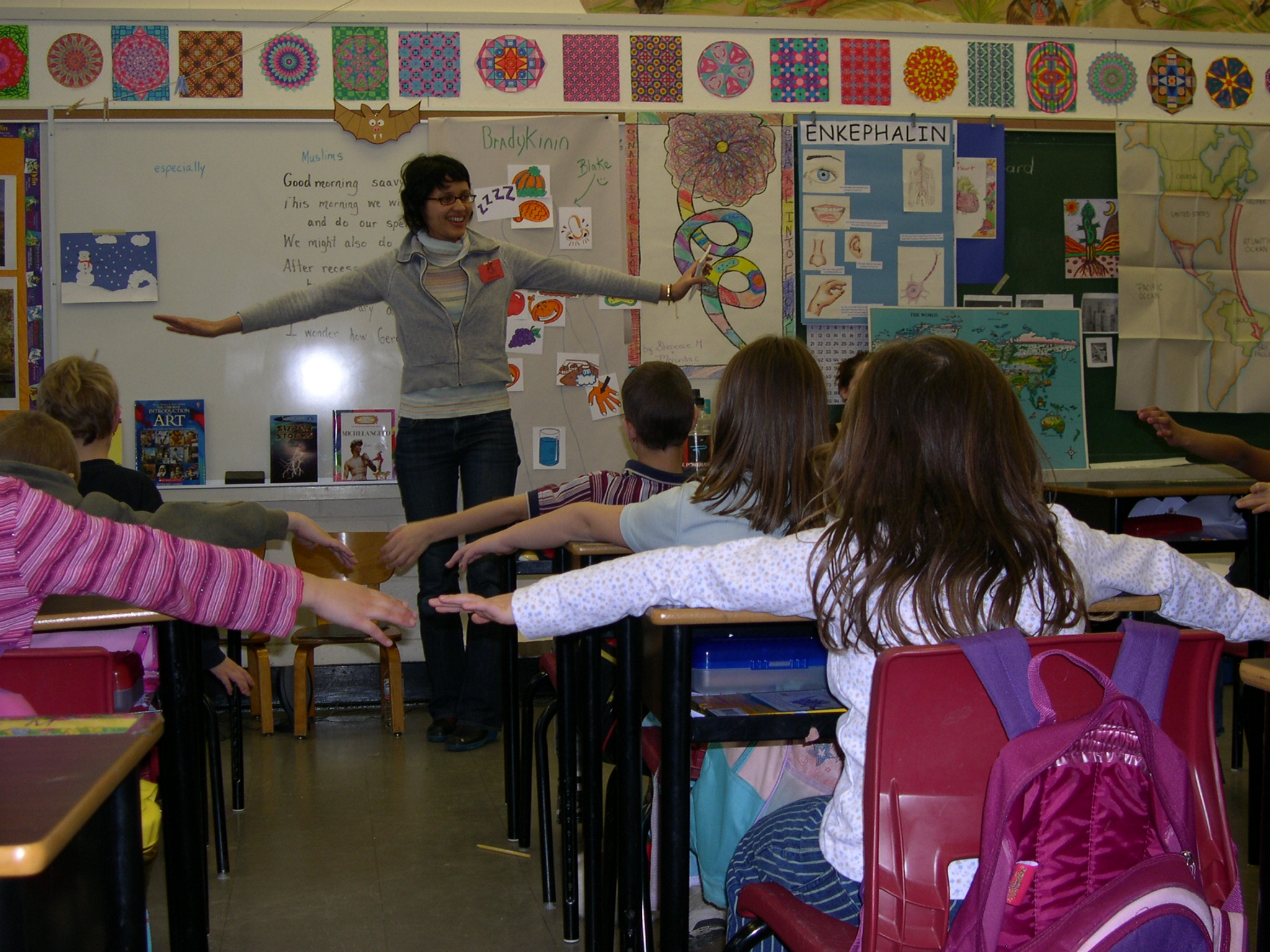
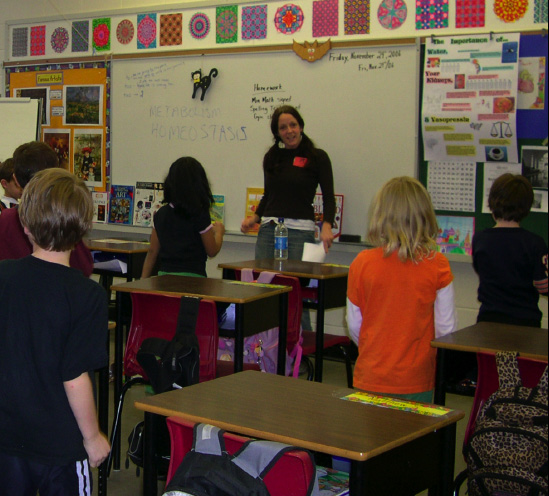
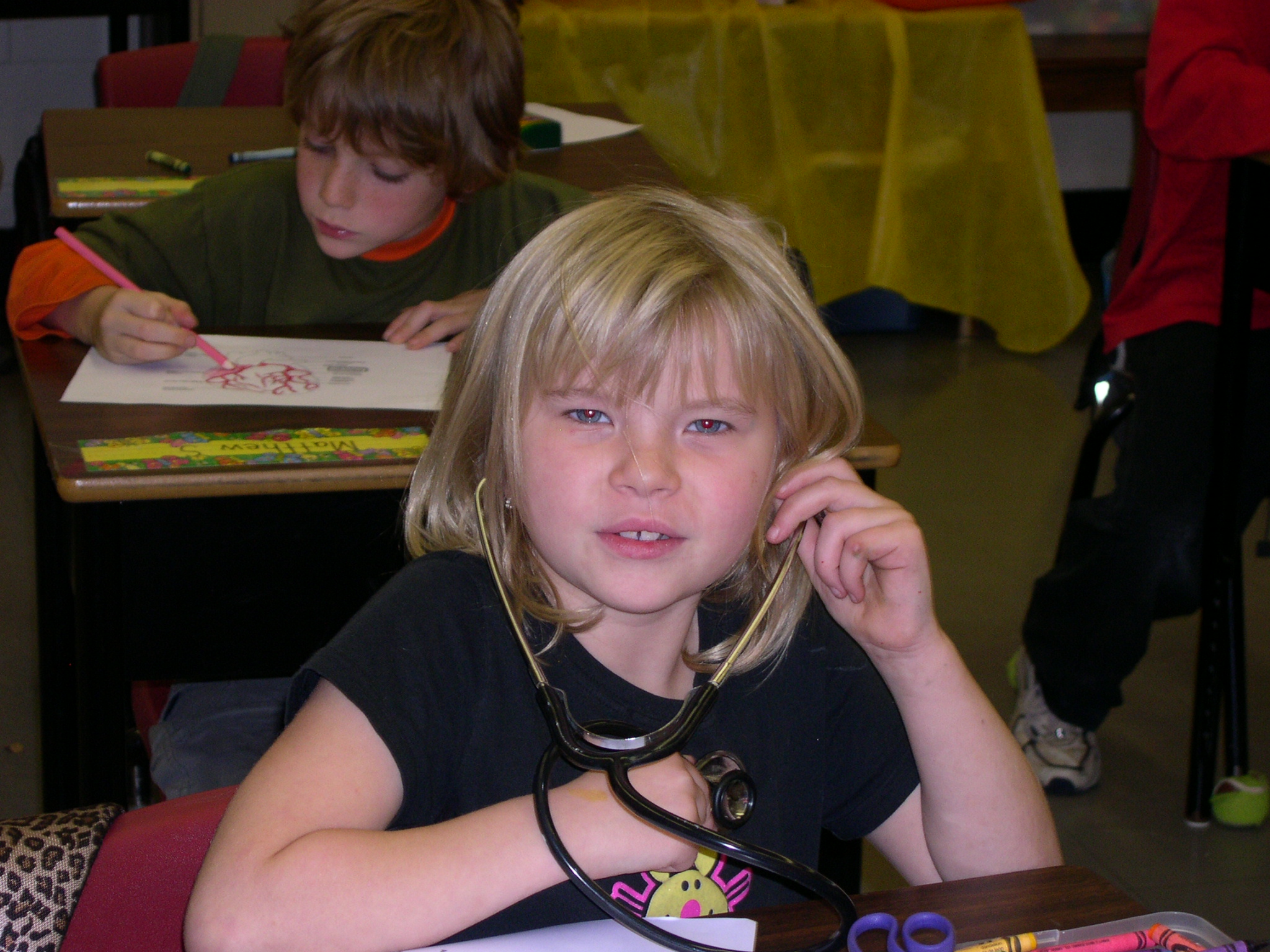
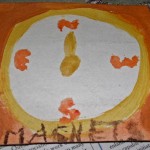
Magnetic moments materialized as the 4th grade students studied iron in Ms Reavell’s class at École FACE School on Friday the 3rd of April, 2009, thanks to MLP Team Iron (Fe), Livienne César (Education student and Bachelor of Art, UQAM ’06) and Sixian Lin (B.Sc. student U Montréal).    Iron is another “essential element” for plant and animal growth, one with the power of becoming magnetic. After refreshing our memory of when we studied hemoglobin and rust dyeing way back in 3rd grade, we were reminded of the biological need for iron which serves in hemoglobin as a transporter, like a school bus, to carry oxygen from the lungs to the body and carbon dioxide from the body to the lungs.  The students then examined a variety of magnets.  Sixian showed that magnetism could be transferred from a magnet to an iron nail, which was later used to make a compass pointing to the Earth’s magnetic north pole. The students made iron filings dance when moving a magnet under the table.  They learned that electricity could change iron into a magnet and explored the workings of an electromagnet.  Magnetizing all the iron around them with magnets and thinking about what is magnetic, the students assembled their own refrigerator magnets guided by Livienne and painted with iron oxide paint pigments that were brought back by MLP Team Mars when they visited the “red planet”, which has soil that is rich in iron oxide.

Grateful for their electromagnetic MLP experience, the students thanked Team Fe for showing us the powers of iron and magnetism.

For more information about iron see: http://mysite.du.edu/~jcalvert/phys/iron.htm

For lesson plan ideas about the role of iron in the human body : http://moleculesoflife.ca/2012/06/teach-about-hemoglobin/


Copper

October 6, 2011 in Elements

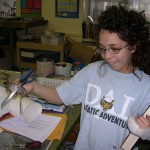
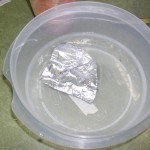
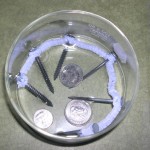
The aging effects of oxidation were revealed to Ms Reavell’s 4th grade class at École FACE School on Friday the 17th of April, 2009, thanks to MLP Team Copper (Cu), Jessie Trubiano (Bachelor student of Art Education, Concordia) and David Sabatino (PDF U Montréal, PhD McGill ’07).   Showing images of the Statue of Liberty, Jessie displayed how the brown face of the copper statue of Ms liberty has turned to green over time as her copper complexion reacted with oxygen and converted to copper oxide.   To put back the shine in the faces of old pennies, David placed them in vinegar and the students watched as the copper oxide was digested away from the metal surface into the acetic acid solution leaving shiny pennies.  The students watched next the reduction of the clear solution containing the oxidized copper by using iron nails, onto which the brown copper plated. Through a discussion of the applications of copper in everyday life, from our plumbing, to our electrical wiring, to the coins in our pockets (albeit the present penny is only 4.5% copper), to the making of bronze (an alloy of copper and tin), the students gained a greater appreciation of the importance of this essential element.

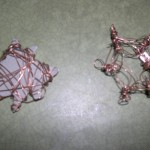
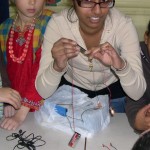
In recognition of the Copper badges worn by North American policemen, which has been claimed for the etymology of words in phrases such as  ”cops and robbers” and ”Come an’ get me, copper!” (see “Angels With Dirty Faces”) the students created their own badges by sculpting with copper wire.    Although ”Cop” (policeman) probably comes from “cop,” meaning to “nab” a suspect, a myth without factual basis suggests that “cop” comes from “copper,” the copper badge that the police wore.  The 4 March 1976, Wall Street Journal cites: The New York City Police Museum proudly claims that its 1845 copper badge was the origin of the slang terms “cop” and “copper,” see: http://www.barrypopik.com/index.php/new_york_city/entry/cop_copper_badge_myth/
Bending metal as our ancestors once did in the “Copper Age”, grateful for an electrochemical MLP experience, the students thanked Team Cu for showing us the pliable nature and useful properties of copper.

For more information about copper see: http://www.copper.org/

Carbon

October 6, 2011 in Elements

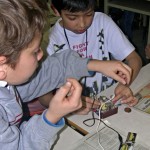
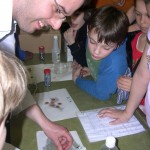
Everyone had a ball making a “Buckyball” and exploring the conducting properties of graphite as MLP Team Carbon (C) left its foot print on the 4th grade students in Ms Reavell’s class at École FACE School on Friday the 20th of March, 2009, thanks to Rita Cardinal (Master of Art Education, Concordia U) and Varsha Kairouz (B.Sc. U Montréal).    Carbon is another “essential element”, Varsha explained leading the students through the carbon cycle refreshing their knowledge of photosynthesis and oxidation.  The students were made aware of and discussed ways to reduce their carbon footprint (“the total set of greenhouse gas (carbon dioxide) emissions caused directly and indirectly by an individual, organization, event or product”).  They then explored the conducting properties of carbon in the form of graphite, which was used to complete a circuit to light a battery and to listen to white noise on a speaker.

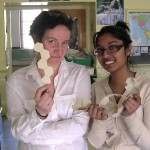
The students were asked to consider the tetrahedral shape of diamond, which is typically an insulator, and the sheet-like structure of graphite, as Varsha linked different kinds of graphite samples (from a large piece for drawing, to pencil leads, to the lead in a pencil, to the graphite images drawn on a piece of paper) showing that all conducted electricity to different degrees.  While discussing how the sheets of carbon could be rolled into tubes, so called nanotubes, which may serve as tiny wires in nano-scale devices, Rita gave the students a sculpture challenge as she explained how parts of flat sheets like graphite could be folded into a model of another form of carbon called a “Buckminster fullerene” or  Buckyball, named after Richard Buckminster Fuller the famous architect who conceived of the structure for building geodesic domes such as in the Biosphere built for Expo ’67 in Montreal.  Constructing and playing with their own Bucky-balls, the students gained an appreciation of the many forms and properties of carbon and were pleased to thank Team C for an organic taste of MLP.


For more information and neat pictures of carbon nanotubes and Buckyballs see:  http://www.nanotech-now.com/nanotube-buckyball-sites.htm