Essential Elements

October 6, 2011 in Elements

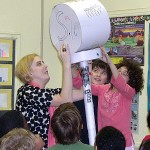
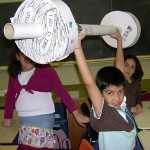
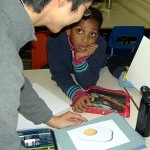
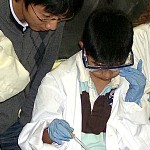
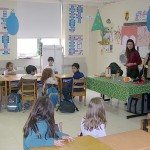
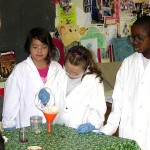
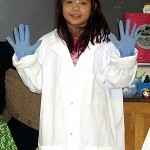
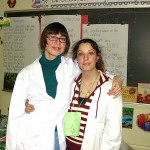
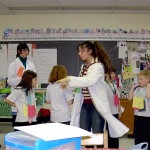
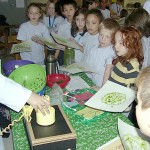
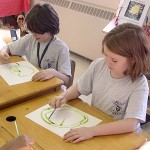
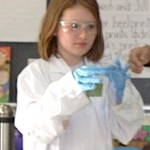
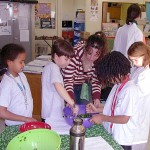
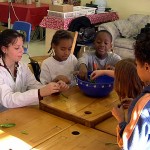
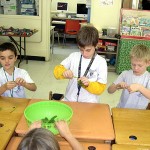
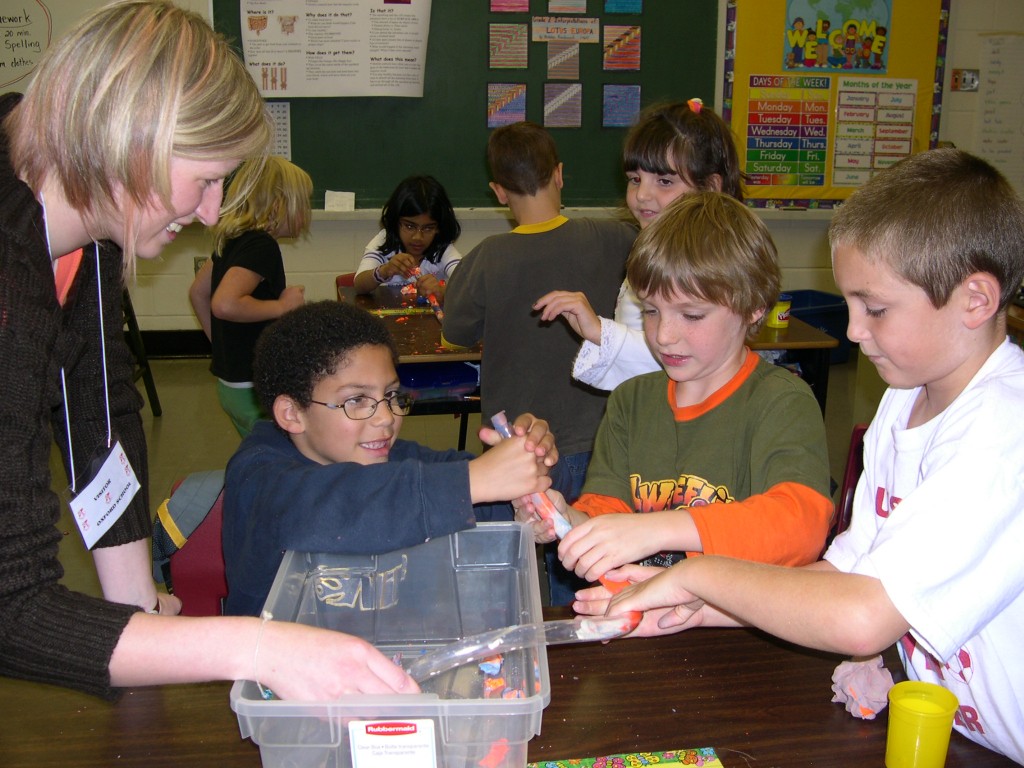
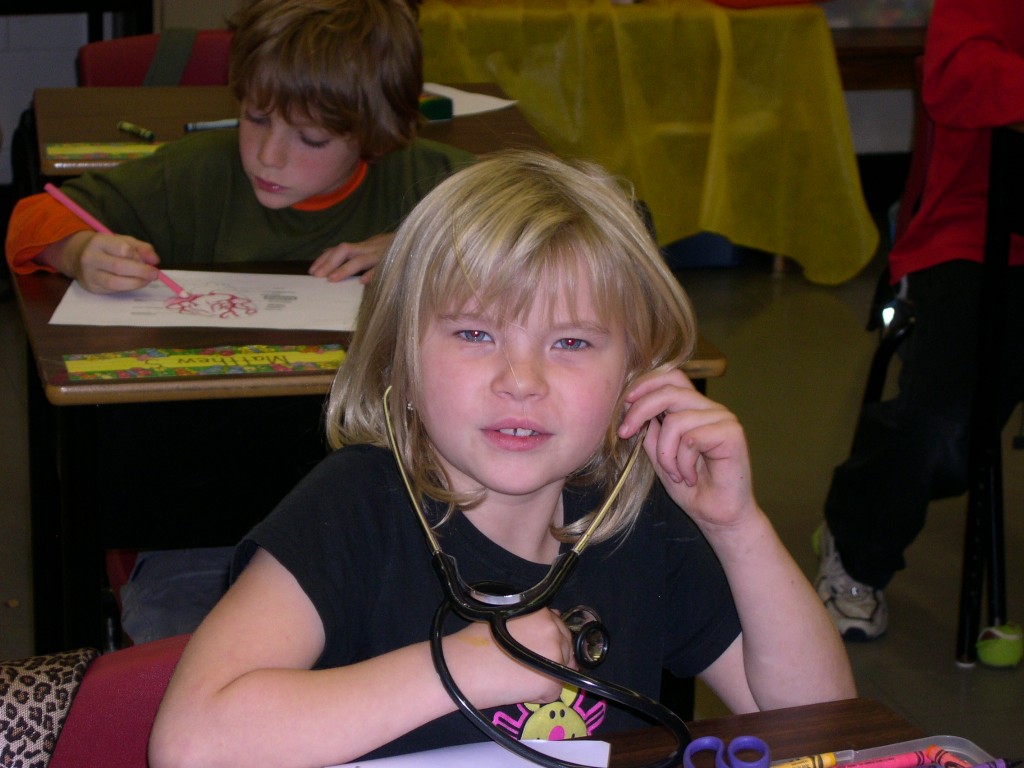
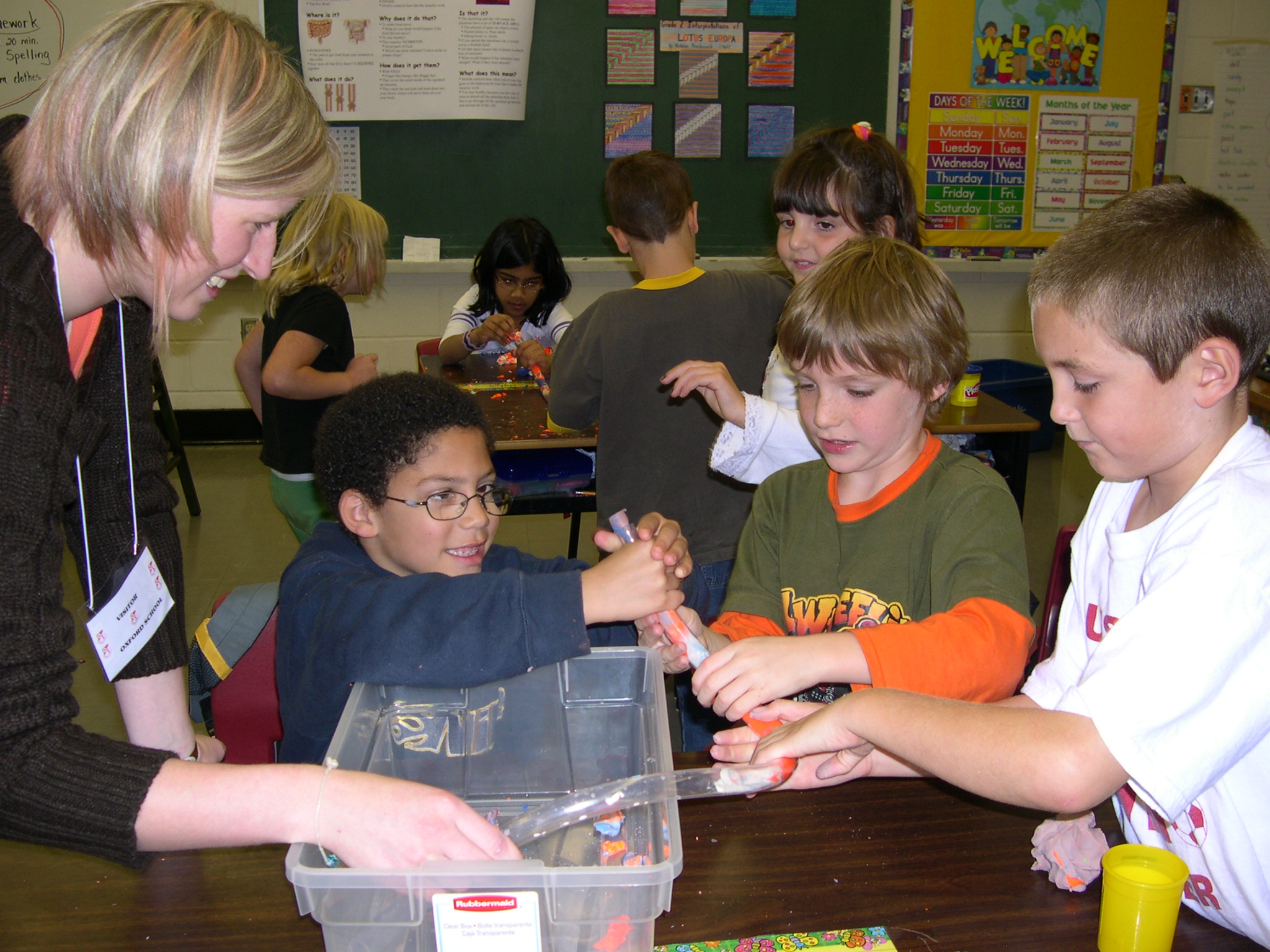
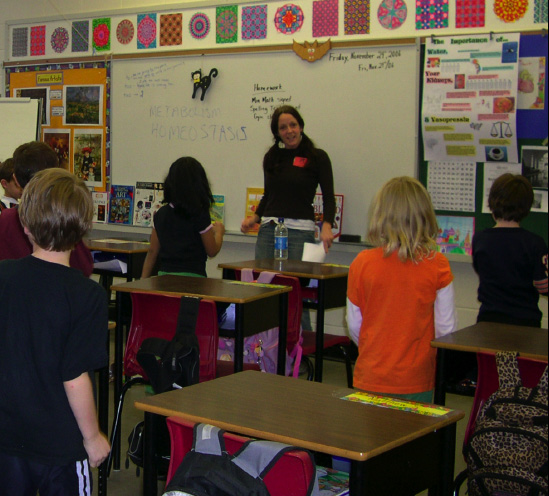
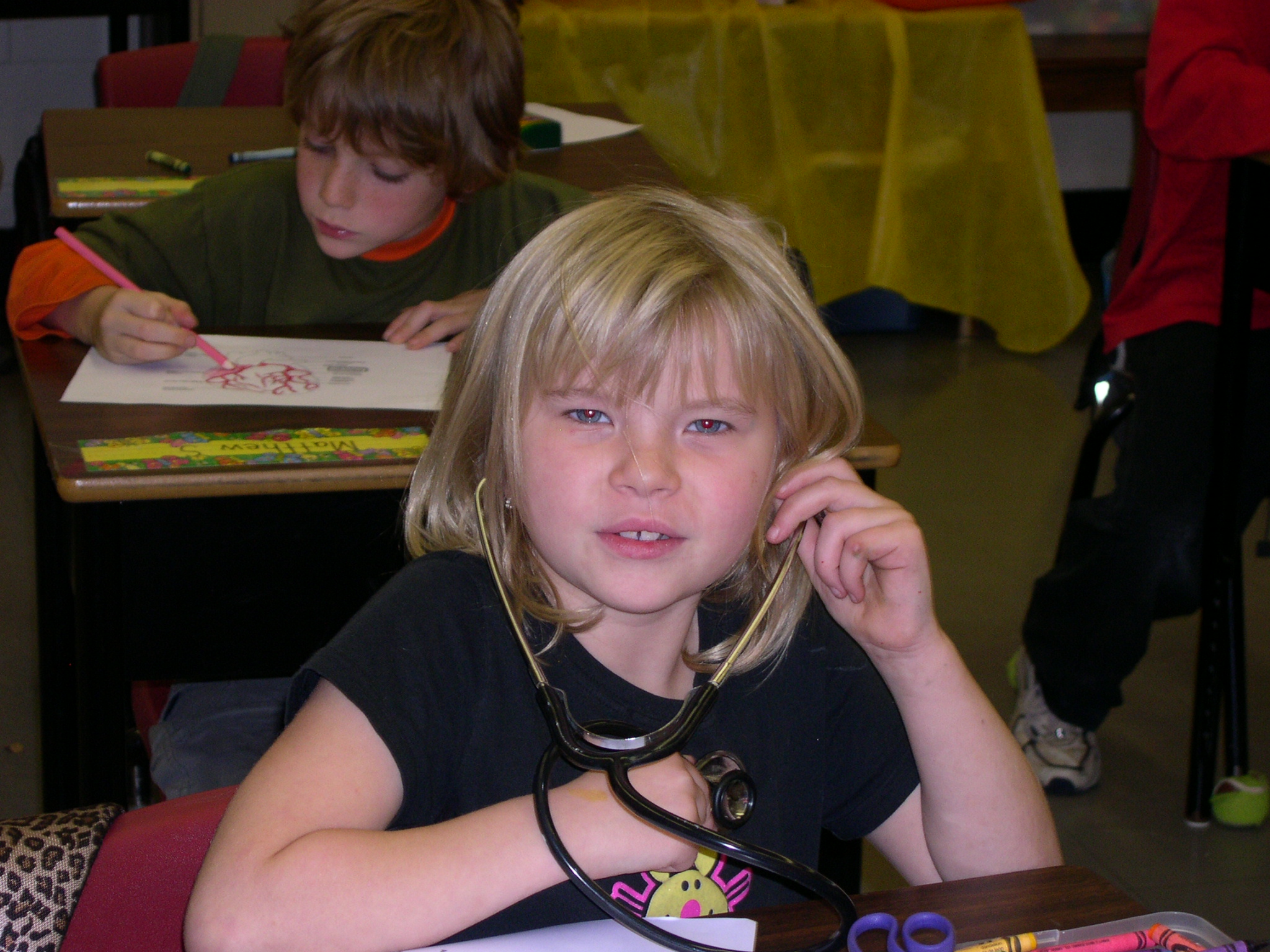
On Friday, November 7th, 2008, our third season of the Molecules of Life Project debuted in Ms Reavell’s 4th grade class with a dose of the Essential Elements delivered by Concordia University Masters of Art Education students Jess Aylsworth, Maya Grubisic and Zac Kenny, and Université de Montréal BSc chemistry students Cindie Eugene and Sixian Lin.  Reviewing the elementary students knowledge of the essential requirements for plant life, we arrived at a discussion of fertilizer and Sixian explained about the big 3 essential elements in fertilizer: nitrogen, potassium and phosphorous.   Cindie then assisted four student volunteers, dressed in proper laboratory attire, to perform a test for nitrogen using ninhydrin as an indicator of amines.  The students were excited to see the nitrogen containing amino acid solution turn purple after heating with ninhydrin and disappointed that a similar color could not be obtained with non-nitrogen containing sugar.  Zac helped introduce to the class five essential elements by separating them into groups that were each assigned  something containing a specific element to color and construct: bananas for potassium, weights for iron, an egg yoke for sulfur, leaves for magnesium and a milk container for calcium.  As the students assembled their separate elements, Sixian used flash cards with pictures of things containing the element on one side and the name and symbol of the element on the other to remind the students of the elements they know about and encounter in their daily lives, i.e., oxygen, potassium, sodium, calcium, gold, silver, mercury, iron, sulfur, helium, chlorine, copper, carbon.  As the essential elements are needed for plant growth, with assistance from Maya and Jess, the students assembled their essential elements into their own plant sculpture.   Coloring their items the students were taught about specific sources of essential elements (like magnesium in chlorophyl).  Assembling the items into a plant sculpture, the students gained an appreciation that the essential elements are all necessary for plant growth.


We thank team Essential Elements for serving the students up a satisfying healthy bowl of elemental molecules of life fun and information.


For more information on the essential elements see:

http://www.soils.wisc.edu/~barak/soilscience326/listofel.htm
 

Taxol

October 6, 2011 in Plants

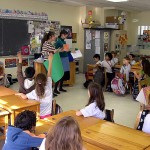
On Wednesday, November 19th, 2008, the students in Mrs Shuster’s third grade class at École F.A.C.E. School were extracting natural products from plants and using their powers of perception to identify them, thanks to university students Alexandra Cadar (B.Sc., U. Montréal) and Julia Waks (BA Art Education, Concordia U).  Alexandra and Julia engaged the class in a discussion on plant derived products.  As an example, slices of aloe-vera were cut and distributed to the students to present an example of a beneficial plant because of its powers to treat burns and wounds.   Similarly, vitamin C was mentioned as an essential nutrient for good health, obtainable from lemons and oranges.  After refreshing the students memory on proper safety attire, three volunteers performed extractions of three samples of different leaves by pipetting hot water over each and collecting the colored extracts.  Using their sense  of smell and examining the color, the students were able to identify the leaf samples from cranberry, camomile and mint.  A discussion of the medicinal attributes of these plants followed.

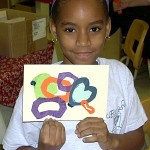
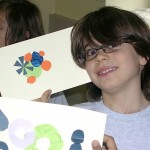
Alexandra and Julia introduced next the molecule of the day “Taxol” which is extracted from the bark of the Yew tree.  Yew trees, are evergreens that can look like Christmas trees.  They are slow growing, some are estimated to be as old as 4,000 years. Yew trees are difficult to start from seed, because they germinate only after passing through the gut of some animal, such as an elk or deer.  Native American Indians used the wood from the Yew tree to make archery bows and paddles, Europeans used it to make musical instruments. About 40 years ago, scientists studied and tested the different parts of the Yew tree and discovered that the bark of the tree and some other parts of the tree contained an active molecule, that they named “Taxol”.  Taxol is now used as a medicine to fight cancer.  The students related their own stories about their interactions with family and friends with cancer, which led to a deeper discussion about this disease and the application of taxol as a cure. Finally, considering the many rings in the structure of taxol, the students made collages featuring rings on the front-side of get-well cards to be delivered to children with cancer at the Montreal Children’s Hospital.

The 3rd graders and all thanked team taxol for their thought provoking and sensitive presentation of the wonders and benefits of plant natural products.

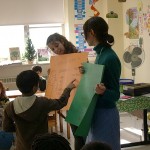
Alexandra Cadar (B.Sc., U. Montréal) and Julia Waks (BA Art Education, Concordia U) leading a discussion on plant-derived products.TACJWclass[1].jpg ¬

Note last week, as mentioned in our MLP on Taxol, the students made collages featuring rings on the front-side of get-well cards, that were delivered to children with cancer at the Montreal Children’s Hospital.  As Julia Waks from Team Taxol writes:

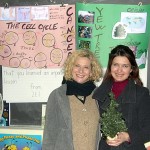
“Attached are the photos taken at the Montreal Children’s hospital. The “absolutely adorable get well cards” were very well received by the staff at both the haematology out patient clinic as well as the 8th floor oncology ward. Mrs.Terry Seguin, head of communications at the hospital, (in photo)and other staff members were very enthusiastic and helpful. The cards look great and will be much appreciated by the kids, parents and staff. Bravo to all the kids for a job well done.”

Chlorophyl

October 6, 2011 in Plants

On Wednesday, November 12th, 2008, the students in Mrs Shuster’s third grade class at École F.A.C.E. School shined, radiating with knowledge of “chlorophyl” provided by  university students April Clyburne-Sherin (BA Art Education, Concordia U.) and Vanessa Kairouz (B.Sc., U. Montréal).   April and Vanessa led the students through the cycle of respiration and photosynthesis explaining how animals take in oxygen and sugar producing carbon dioxide and water which the plants take in to produce oxygen and sugar.  Chlorophyl was presented as the molecule that harnesses energy from light for the conversion of carbon dioxide and water into oxygen and sugar.  Employing spinach leaves, the students were led through an extraction which started with everyone tearing up leaves and finished by students in proper lab-attire using rubbing alcohol (iso-propanol) and water to extract out the green colored chlorophyl.  Employing the extract as paint, the students then painted pictures of their favorite food.  The pictures were next examined under a black light bulb and appeared to luminance an orange red colour. April and Vanessa explained how under blacklight the chlorophyll reacts with light absorbing its energy and later releasing the energy by glowing and producing heat.

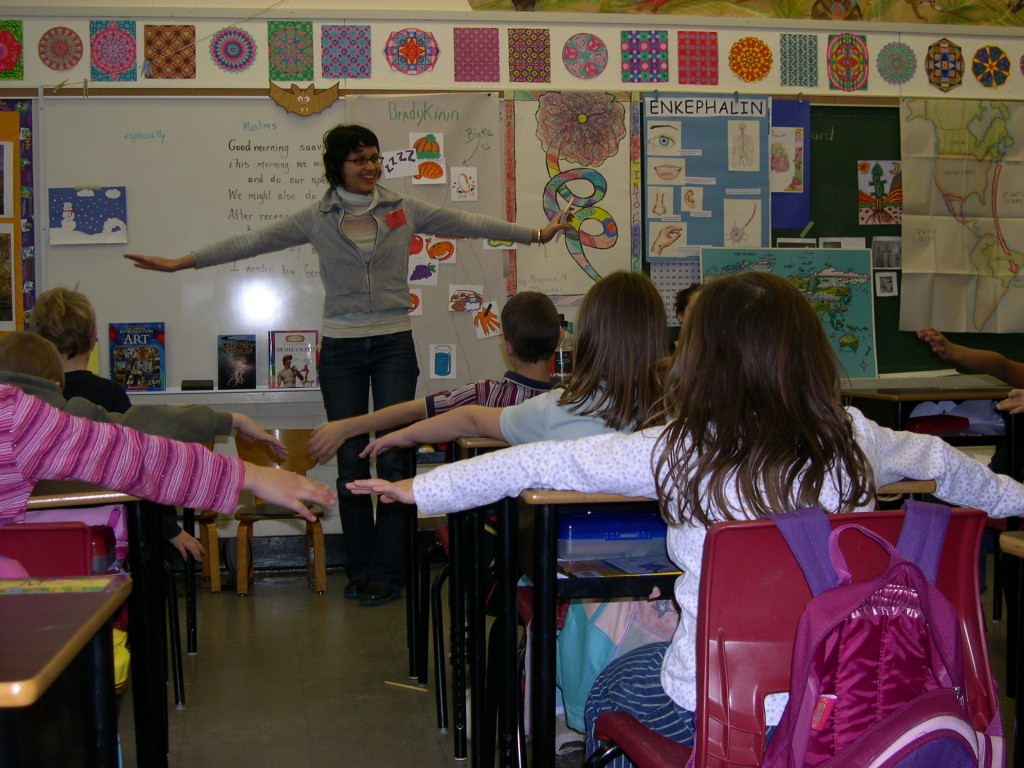
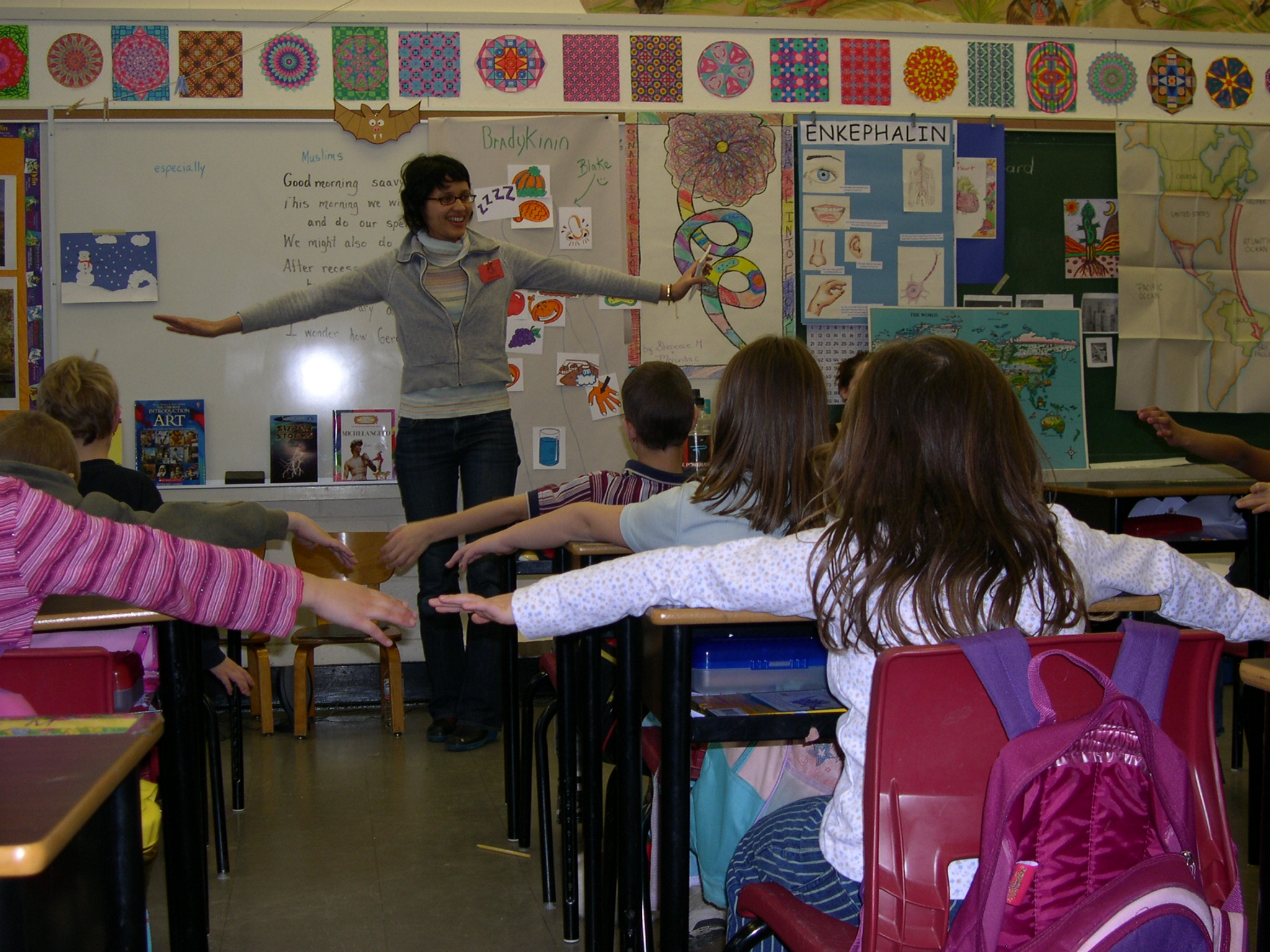
Using modern dance to help the students interpret the relationship between the molecules in the photosynthesis and respiration cycles, team chlorophyl inspired students to behave as molecules by exchanging cards containing their atoms as they converted themselves from oxygen and sugar to carbon dioxide and water and back again.

Illuminated like chlorophyl, we all thanked team chlorophyl for shining some light on the wonders of photosynthesis and plant chemistry.

Note: the chloro portion of the word is from the Greek chloros, which means yellowish green. The name of the element chlorine also comes from the same source. Chlorine is a yellowish green gas. There is no chlorine in chlorophyl, but there is magnesium.

For more information see: http://scifun.chem.wisc.edu/CHEMWEEK/CHLRPHYL/Chlrphyl.html

For chlorophyl experiment see:

http://c-lab.co.uk/default.aspx?id=9&projectid=58